

Key Technologies Used in Smart Facilities Management
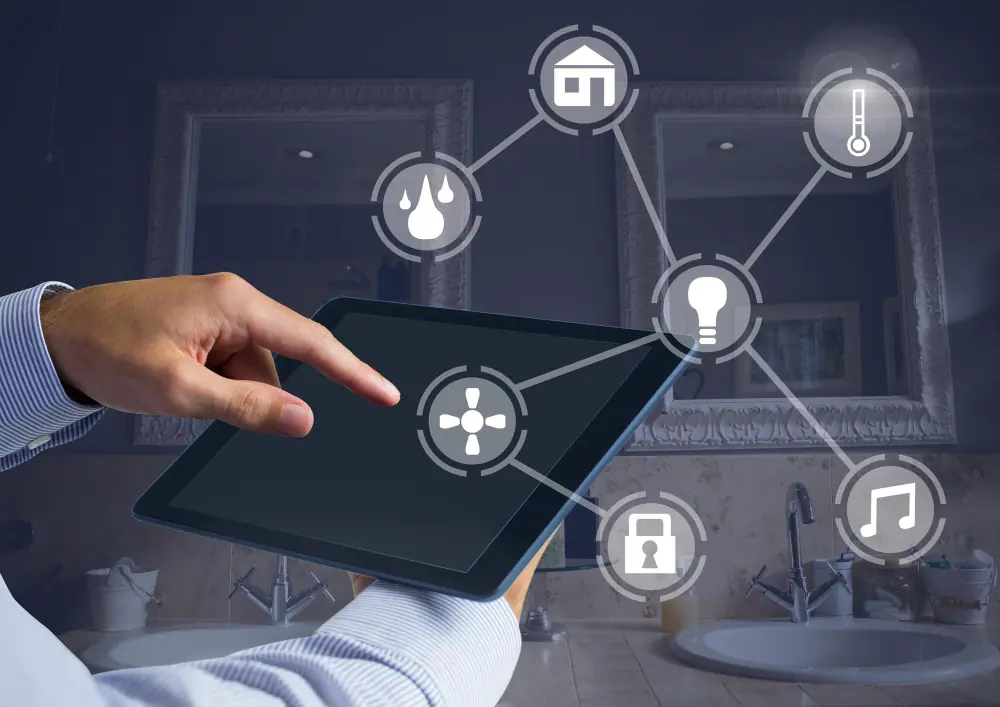
“Technology” in a facilities context isn’t a single product — it’s a stack of layers that each do a specific job, and a platform can be strong in one layer while missing another entirely. Understanding what each layer is actually for makes it easier to ask the right question when evaluating a system, instead of getting lost in buzzwords.
IoT Sensors and Connected Devices — the input layer
Purpose: capturing physical conditions (temperature, occupancy, equipment status) or field observations without waiting for someone to walk over and check manually. In facilities specifically, this can range from actual sensors on mechanical equipment to something simpler: a location-tagged mobile check-in from an inspector doing a scheduled round. The job of this layer is the same either way — get condition data into the system as close to real time as the situation allows, rather than relying on memory or an end-of-day paper summary.
Cloud Platforms — the record layer
Purpose: a single, accessible place where that data lives and stays consistent regardless of which office, site, or device produced it. For an organization running multiple centers, this matters specifically because it removes the need for each site to keep its own local records that someone later has to reconcile with head office. It’s also what makes it possible for a manager in one city to review a case created in another without waiting for a file to be emailed over.
Mobile Access — the field layer
Purpose: letting the people actually on-site — inspectors, contractors, technicians — record and retrieve information from where the work happens, not from a desk. This is less about having “an app” and more about what the app connects to: a mobile check-in that updates the same central record everyone else sees is a real technology layer; a mobile app that just emails a PDF to someone is not meaningfully different from a paper form.
Analytics and Dashboards — the interpretation layer
Purpose: turning accumulated records into something a person can act on — which locations generate repeat violations, which contracts have rising unresolved items, where inspection coverage is thin. This layer only works if the layers beneath it (sensor or mobile input, centralized cloud records) are already feeding it consistent data; a dashboard built on incomplete or duplicated records will show a confident-looking chart that’s simply wrong.
Integration APIs — the connective layer
Purpose: linking the platform to systems an organization already uses instead of forcing a rebuild. Two integrations matter most in a facilities context: mapping services, which turn a location record into an actual point on a map that a field inspector or manager can navigate to instead of interpreting a text address; and identity systems such as Microsoft Azure, which let staff access the platform using their existing organizational account instead of a separate login the IT team has to manage on top of everything else.
These layers build on each other in order — a dashboard is only as good as the records feeding it, and those records are only as good as the mobile or sensor input capturing them in the first place. When evaluating a system, it’s worth tracing a single piece of data from where it’s captured through to where it shows up in a report, because that path reveals which of these layers is actually doing real work and which is decorative.